
Importing Onions from India to Malaysia: A Buyer's Guide
Malaysia imports almost all of its onion and India has been its largest supplier. The paperwork that trips up first shipments is not customs, it is FAMA.
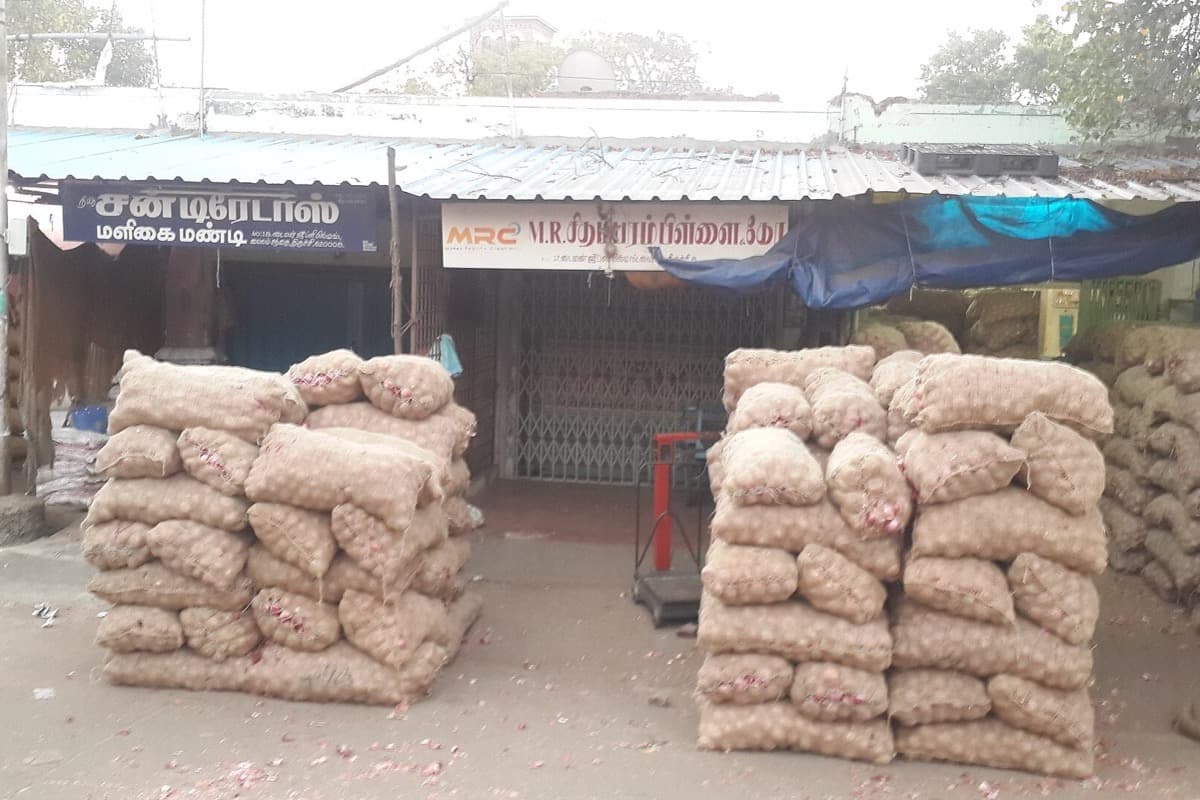
Malaysia consumes roughly 750,000 tonnes of onion a year and grows almost none of it. That makes it one of the most import-dependent onion markets in Asia, and for most of the last decade India has been its largest supplier. This guide covers what a Malaysian buyer actually needs to bring Indian onion in, including one regulatory requirement that almost every published account of this route leaves out.
The size of the trade, and how it moved
Indian government figures tabled in the Lok Sabha put onion exports to Malaysia at around 170,000 tonnes in 2021 to 2022, 393,000 tonnes in 2022 to 2023, and 167,000 tonnes in 2023 to 2024. UN Comtrade data for the same commodity code shows Malaysia importing about 566,000 tonnes in 2023, of which India supplied roughly 320,000 tonnes, or about 57 per cent by volume.
Then it changed sharply. By 2024, Malaysian officials citing national statistics put the supplier shares at China 46.3 per cent, India 19.2 per cent, Pakistan 15.4 per cent. India went from supplying more than half the market to under a fifth in a single year, and the cause was not commercial.
| Year | India share of Malaysian onion imports |
|---|---|
| 2023 | About 57% by volume, roughly 320,000 t |
| 2024 | About 19%, with China at 46% and Pakistan at 15% |
Why India lost share, and what it means for you
Between October 2023 and April 2025 India ran, in sequence, a 40 per cent export duty, a minimum export price of 800 US dollars a tonne, an outright export prohibition from December 2023, an indefinite extension of that ban, a lower minimum export price with duty, then a 20 per cent duty, and finally withdrawal of that duty with effect from 1 April 2025.
Malaysian buyers were forced onto Chinese and Pakistani product during the ban and a good deal of that business has not returned. The lesson for anyone building a programme on this route is not that Indian onion is unreliable, but that the policy risk has to be allocated in the contract rather than assumed away.
Duty: there is nothing to claim
This is worth stating plainly because buyers spend effort chasing a benefit that does not exist here. Under Malaysia's Customs Duties Order 2022, the tariff lines covering onions and shallots carry an import duty of zero. The most favoured nation rate is already nil.
The ASEAN-India Trade in Goods Agreement has been in force since January 2010 and uses the Form AI certificate of origin, with an origin rule of at least 35 per cent regional value content plus a change in tariff sub-heading. None of that helps you on fresh onion, because a preferential rate of zero is no better than an MFN rate of zero.
Do not pay for a Form AI on this product expecting a duty saving. Ask for it only where a downstream requirement genuinely needs proof of origin under the agreement.
The requirement most guides omit: FAMA
Quarantine and customs get all the attention, but the requirement that most often catches a first Malaysian import of produce is the Federal Agricultural Marketing Authority regime. Onions are expressly listed as a fresh vegetable under the FAMA Grading, Packaging and Labelling of Agricultural Produce Regulations 2008, which means a Conformity Certificate is required to import.
The regulations are prescriptive about how the goods are packed and labelled, and the specifications differ from ordinary Indian export practice in ways that must be settled before production, not after.
| Requirement | What the regulations specify |
|---|---|
| Package weight | Maximum 30 kg per package |
| Package contents | One type and one grade per package |
| Label size | At least 11 cm by 7 cm |
| Lettering | Not less than 20 point |
| Language | Bahasa Malaysia |
| Placement | Firmly and conspicuously on the top or side |
The 30 kg cap matters commercially. Indian onion commonly moves domestically in heavier sacks, and 25 kg mesh bags sit comfortably inside the Malaysian limit while 50 kg sacks do not. Tell your supplier the bag weight at the quotation stage rather than discovering the problem when a consignment is presented for clearance.
On grading, the regulations set a hierarchy: a Malaysian Standard applies if one exists; if not, the grade standards of the country of origin apply; and failing both, standards prescribed by FAMA. That means an Indian exporter's own size grading can be legitimate, provided it is stated and consistent.
Quarantine, permits and food safety
Two separate authorities are involved and they are often confused with each other.
- MAQIS, the Malaysian Quarantine and Inspection Services, handles plant quarantine at the point of entry. On the sources available, fresh onion from India does not require a MAQIS import permit, but consignments are subject to quarantine inspection on arrival.
- FSQD, the Food Safety and Quality Division of the Ministry of Health, administers the Food Act 1983 and Food Regulations 1985, and handles food safety, pesticide residues and border sampling. This is a separate track from quarantine.
Get the product name right
The single most common accuracy error on this route is conflating products that the Malaysian market treats as distinct, each with its own price and its own buyers.
- Bawang besar, or bawang merah besar, is big onion. This is the main Indian-origin product on this lane.
- Bawang besar kuning is yellow onion, frequently sourced from the Netherlands or China rather than India.
- Bawang merah kecil is small red onion or shallot, also often Indian but a different product entirely.
Specify which of these you are buying, in the Malaysian term your own market uses, alongside the size band in millimetres. A quotation for the wrong one is a wasted week.
Routes and timing
Port Klang is the main gateway and Malaysia's largest container port, with Penang serving the north and Johor Port the south. Sea transit from India's west coast runs roughly a week, which is short enough that ventilated dry containers are standard rather than reefer.
Demand has a defined festive calendar, and the Ministry of Domestic Trade and Cost of Living operates a Festive Season Maximum Price Scheme under which onions, including Indian-origin onions by name, appear repeatedly under statutory ceiling prices. Buy ahead of those peaks rather than into them: origin prices respond to anticipated demand well before the festival itself.
What to send with an enquiry
- The Malaysian product name and the size band you need in millimetres.
- Bag weight, remembering the 30 kg regulatory cap.
- Whether you need labelling applied at origin in Bahasa Malaysia to the FAMA specification.
- Destination port: Port Klang, Penang or Johor.
- Quantity and your delivery window.
Give us those five and we can quote against current origin prices the same day, and tell you plainly where Indian export policy stands that week.
Sources & further reading
- PIB, country-wise Indian onion exports tabled in Lok Sabha · official export volumes by destination
- PIB, withdrawal of 20% onion export duty from 1 April 2025 · the policy sequence from 2023 to 2025
- World Bank WITS and UN Comtrade, Malaysia imports of HS 070310 · supplier shares by volume and value
- Customs Duties Order 2022, Malaysia · confirms 0% import duty on onions and shallots
- Federal Agricultural Marketing Authority (Grading, Packaging and Labelling of Agricultural Produce) Regulations 2008 · P.U.(A) 274/2008, full text via FAOLEX; Conformity Certificate, package and label specifications
- MITI Malaysia, ASEAN-India Trade in Goods Agreement · Form AI and rules of origin
- USDA FAS, Malaysia food and agricultural import regulations report · FSQD, Food Act 1983 and border control practice
Sourcing onion?
We export onion from India
See grades, packing specifications and container capacities, or send us your destination port and quantity for a quotation.
More guides
Importing Onions from India to Bangladesh: A Buyer's Guide
Bangladesh is the largest destination for Indian onion, and the shortest route in the trade. It is also the most exposed to policy change at origin.
MarketsImporting Fresh Produce from India to the UAE
The UAE is the shortest serious export route out of India for fresh produce. What the trade looks like in practice: routes, paperwork, duty and timing.
OnionHow to Import Onions from India: Documents, Duty and Timeline
What an importer actually needs to arrange a first onion shipment from India: the document set, how export policy moves prices, and how long each stage really takes.
ShippingReefer Temperatures for Onion, Banana, Pomegranate and Chilli
The setpoint, humidity and vent settings for each fresh product we ship, why a reefer cannot rescue warm fruit, and the chilling injury that only shows up at destination.