
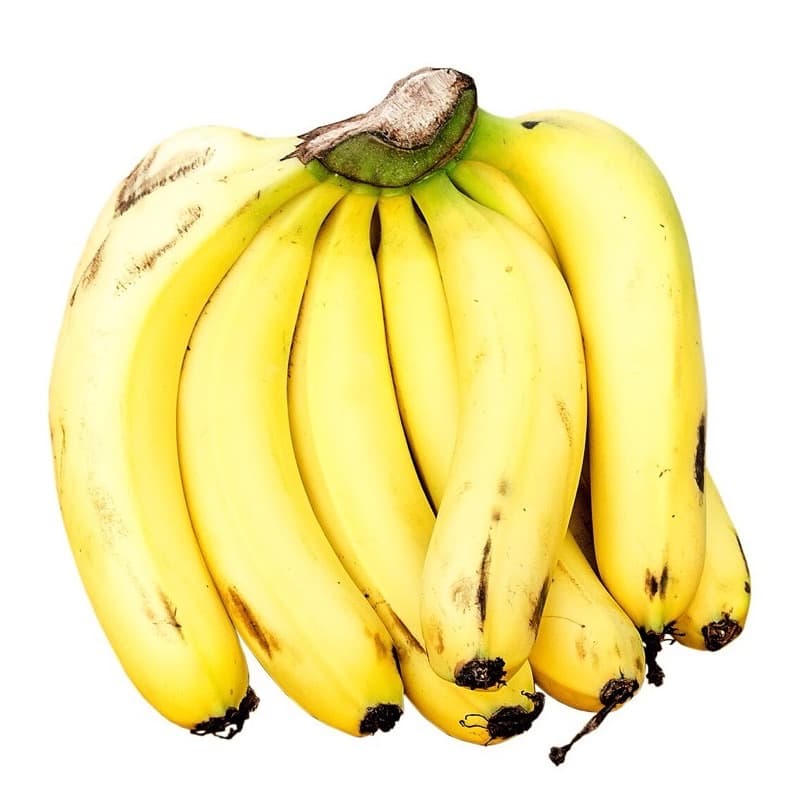
G9 Cavendish Banana, Reefer Exports from India
India is the world’s largest banana producer, and the Grand Naine (G9) Cavendish variety is the backbone of its fast-growing export trade. Aarvoyage Global Exim exports G9 banana harvested at hard-green stage, processed and packed to international carton standards, and shipped in reefer containers to the Gulf and Middle East.
Bunches are de-handed, washed, treated and packed as 4–6 hands per 13.5 kg carton with poly lining. Fruit travels at 13–14°C, arriving green for controlled ripening at destination, the standard the Iran, Iraq and Gulf markets buy against.
A 40 ft reefer holds approximately 20 MT (1,540 cartons), which is our minimum order. We schedule cutting against vessel dates so transit time is used, not wasted, and every shipment carries phytosanitary certification and certificate of origin.
Banana contracts are written around caliper, the diameter of an individual finger, and finger length, rather than weight per hand. Both are measured on a defined finger of the outer whorl, so it is worth agreeing the measurement convention as well as the number. Caliper commonly falls in the region of 39 to 46 mm and finger length roughly 15 to 23 cm, with markets differing on preferred thickness and longer fruit often commanding a premium at retail. Tell us the grade your market takes and we will cut to it.
One practical matter to settle before a first order: green fruit requires ripening capacity at destination. Bananas are ripened in sealed rooms where ethylene is introduced, temperature is raised and airflow is managed, over a cycle of roughly four to seven days, with the importer choosing where on the colour scale fruit leaves the room. Buyers occasionally arrange a container before securing that capacity, and green fruit with nowhere to go deteriorates on an unhelpful schedule. If you are new to the product, confirm your ripening arrangements first.
At a Glance
- Variety
- Grand Naine (G9) Cavendish
- Packing
- 13.5 kg carton, 4–6 hands, poly-lined
- Stage
- Hard green at loading; ripens at destination
- MOQ
- 1 reefer container (approx. 20 MT / 1,540 cartons)
- Key markets
- Iran, Iraq, UAE, Oman, Saudi Arabia, Afghanistan
Banana Products
Frequently Asked Questions
At what stage are export bananas harvested?
G9 bananas are cut at hard-green maturity (typically 75–80%), so fruit withstands reefer transit and ripens under controlled conditions at the destination market.
What are the carton specifications for banana export?
Standard export cartons hold 13–13.5 kg net, packed as 4–6 hands with poly lining. A 40 ft reefer container carries approximately 1,540 cartons (about 20 MT).
What temperature is maintained during banana shipment?
Reefer containers run at 13–14°C with controlled ventilation, giving 30–40 days of transit and storage life, sufficient for all Gulf and Middle East routes. The range is narrower than it looks: above it, fruit begins ripening in transit; below roughly 13°C, bananas suffer chilling injury that dulls the skin and prevents them ripening evenly afterwards.
Do I need ripening facilities at destination?
Yes. Fruit ships hard green by design, so it needs a ripening room, your own or a service provider’s, where ethylene is introduced under controlled temperature and airflow over roughly four to seven days. Confirm that capacity before booking a first container, since green fruit without ripening arrangements deteriorates without becoming saleable.
What caliper and finger length do you supply?
Caliper commonly falls around 39 to 46 mm and finger length roughly 15 to 23 cm, graded to the band your market takes. Because both are measured on a defined finger of the outer whorl, agree the measurement convention alongside the number when you place the order.
Can you ship less than a full container?
Banana is not a product that ships economically in part loads. Both the reefer freight economics and the handling requirements favour full container quantities, so one 40 ft reefer of approximately 20 MT is our minimum. If you need a smaller trial volume, tell us your market and we will discuss what is practical.
How long is transit to Gulf and Middle East ports?
Sea transit to Gulf ports is typically in the region of one to two weeks from an Indian west coast port, well inside the thirty to forty days of life that correctly handled fruit carries. That margin is what makes the lane workable, and it is also why cutting is scheduled against the vessel date rather than in advance.
What documents accompany a banana shipment?
Phytosanitary certificate, certificate of origin, commercial invoice, packing list and the bill of lading. For reefer cargo we would add one more to your list: require the temperature record from the voyage as a document rather than a favour after arrival, because without it a cold chain dispute cannot be resolved.
What goes wrong most often with banana shipments?
Four failures account for most claims: fruit ripening in transit because the set point was too warm or the cut too mature, chilling injury from running too cold, crown rot from inadequate treatment after de-handing, and uneven ripening from mixed maturity in one container. Agreeing the harvest stage and set point in writing addresses most of them.
Is the fruit sold green or ripe?
Green. Bananas are climacteric, meaning they continue ripening after harvest in response to ethylene the fruit itself produces, so export fruit is cut before that reaction starts and ripened under control at destination. A container of export bananas looks unappetising at loading, and it is meant to.
Buyer guides: Banana
All export guides →Importing G9 Bananas from India: Specs and Reefer Settings
Bananas are the least forgiving fruit in the export trade: get the harvest stage or the reefer setting wrong and the container arrives worthless. What to specify, and why.
ShippingIncoterms for Fresh Produce: Who Pays When Cold Chain Fails
The Incoterm decides who pays for the reefer and who carries the loss if the temperature slips. Most fresh-produce buyers discover which, only after a container arrives warm.
MarketsImporting Fresh Produce from India to the UAE
The UAE is the shortest serious export route out of India for fresh produce. What the trade looks like in practice: routes, paperwork, duty and timing.