
HS Codes and Import Duty for Indian Fresh Produce
One small field on an invoice sets your duty rate, your regulatory treatment and whether you qualify for preferential access. Most buyers never check it until customs does.
On every commercial invoice there is a short numeric field that most buyers skim past. It determines the duty you pay at entry, which regulatory regime your goods fall under, whether you qualify for preferential access under a trade agreement, and how the shipment appears in national trade statistics. It is also, more often than the trade likes to admit, wrong.
This guide covers what those numbers are, how they are structured, the specific codes that apply to Indian fresh produce and spices, and the part that has the largest effect on landed cost: how a certificate of origin turns a tariff line into a preferential rate. It is written for importers rather than customs brokers, and it concentrates on the decisions a buyer can actually influence.
How the numbering works
The Harmonized System is maintained by the World Customs Organization and is used by the overwhelming majority of trading nations. Its structure is hierarchical and, once you see it, easy to read. The first two digits are the chapter, describing a broad family of goods. The next two form the heading, and the next two the subheading. Those six digits are internationally standardised: a subheading means the same thing in Mumbai, Rotterdam and Dubai.
Beyond six digits, countries extend the code for their own tariff and statistical purposes, and those extensions are not harmonised. India publishes an eight digit extension known as the ITC (HS), the Indian Trade Classification. Your own country will have its own extension, often eight or ten digits. This is the single most common source of confusion in a first shipment: your supplier quotes an eight digit Indian code, you look it up in your national tariff, and the digits after the sixth do not correspond to anything.
Codes for Indian produce and spices
The table below gives the international six digit subheading and the Indian eight digit extension for the products covered on this site. Use the six digit column when you check your own national tariff.
| Product | HS (6 digit) | Indian ITC (HS) | Chapter |
|---|---|---|---|
| Onion, fresh or chilled | 0703.10 | 07031010 | 07 Vegetables |
| Green chilli, fresh or chilled | 0709.60 | 07096010 | 07 Vegetables |
| Dry red chilli, not crushed or ground | 0904.21 | 09042110 | 09 Spices |
| Pomegranate, fresh | 0810.90 | 08109010 | 08 Fruit |
| Banana, fresh, other than plantain | 0803.90 | 08039010 | 08 Fruit |
| Rice, semi-milled or wholly milled | 1006.30 | varies by variety | 10 Cereals |
| Wheat, other than durum or seed | 1001.99 | varies by grade | 10 Cereals |
Two entries in that table deserve attention because they are where classification most often goes wrong.
The chapter boundary that catches people out
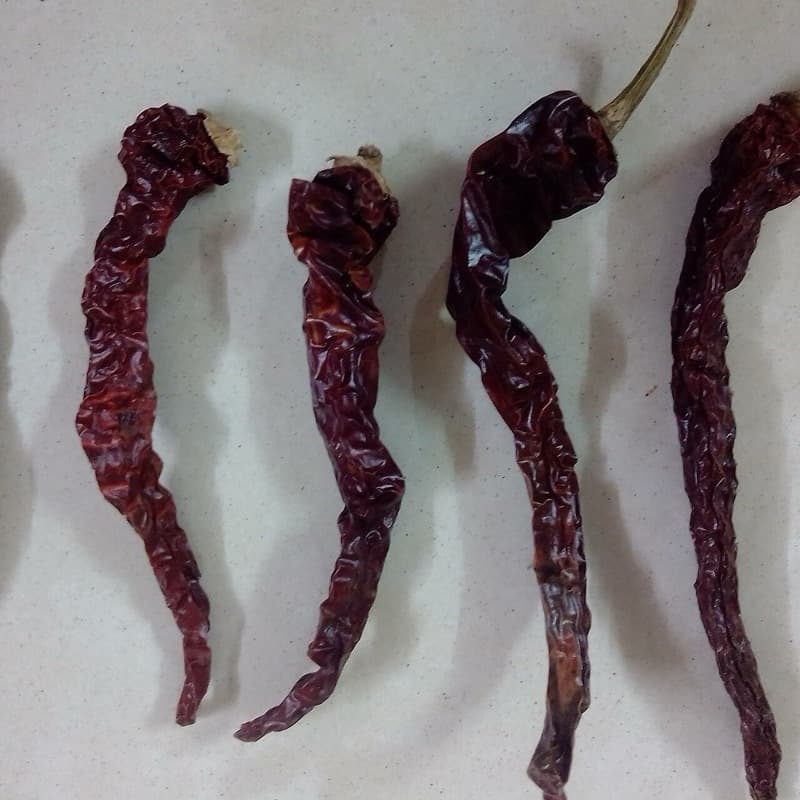
Fresh green chilli and dry red chilli are the same botanical fruit, from the same genus, often from adjacent fields. They sit in different chapters of the tariff. Fresh capsicum is a vegetable under Chapter 07. Dried capsicum is a spice under Chapter 09. That is not a technicality: the two chapters can carry different duty rates, different documentary requirements, and in some markets different regulatory oversight entirely, because one is treated as fresh produce and the other as a dried spice with its own contamination controls.
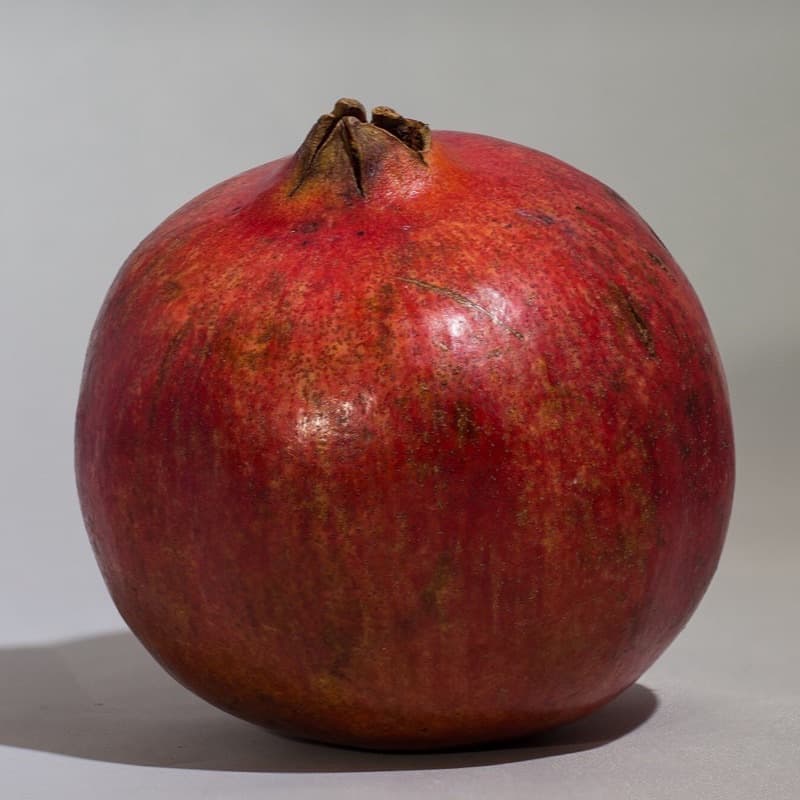
The same logic runs through the fruit chapter. Fresh pomegranate classifies under the fresh fruit heading, while dried pomegranate seed, sold in the Indian trade as anardana and used as a souring agent, sits under a separate eight digit line and is treated as a different commodity. A buyer who orders anardana against a fresh pomegranate code will find the discrepancy at entry, not before.
Bananas carry a distinction of their own. The heading separates plantains from other bananas, and the Cavendish fruit exported from India falls in the latter group. Where a market applies different treatment to plantains, and several do, using the wrong side of that split changes the rate.
What the code actually determines
- Duty rate. The tariff line is the entry point to your country's schedule, and it fixes the base rate before any preference is applied.
- Regulatory treatment. Sanitary and phytosanitary rules, residue limits and inspection regimes are usually written against tariff classifications.
- Import licensing and quota. Where a market restricts or licenses a commodity, the restriction is expressed as a code.
- Preferential eligibility. Trade agreement schedules are organised by tariff line, so whether your goods qualify for a concession depends on where they classify.
- Statistics. Your shipment joins national trade data under that line, which is what platforms reporting export volumes are ultimately reading.
The first and fourth of those are where the money is, and they interact. A base rate you accept as fixed may in fact be reducible to zero by a document your supplier can issue, and whether it can be depends on the tariff line.
Duty is only one line in the landed cost
It is worth putting the tariff in proportion, because buyers new to a lane sometimes optimise the duty rate while ignoring larger numbers sitting next to it. The customs duty derived from your tariff line is one charge among several that arrive together at entry.
- Customs duty, calculated from the tariff line and the customs value.
- Import VAT or GST, which most markets levy on the duty-inclusive value, so a duty reduction reduces this too, slightly.
- Any additional trade remedy in force on the line, such as a safeguard measure, which applies on top of the base rate.
- Port, terminal and handling charges, which for reefer cargo are materially higher than for dry containers.
- Inspection and testing costs where your market samples fresh produce at entry.
- Demurrage and detention, which for perishables can eclipse every other line if clearance stalls.
The reason this matters to the classification question is sequencing. A correct code that clears smoothly is worth more than an aggressive code that saves duty and triggers a query, because for fresh produce the cost of delay is not merely financial. Days spent in a customs dispute come directly out of the shelf life you bought.
Certificates of origin: two different documents
Almost every shipment travels with a certificate of origin, and buyers frequently treat it as a formality. There are in fact two distinct kinds, and confusing them is expensive.
An ordinary or non-preferential certificate of origin simply attests where the goods were produced. It satisfies general customs requirements and is sometimes needed for import licensing, but it does not reduce duty. This is the document most exporters issue by default.
A preferential certificate of origin is issued under a specific trade agreement, names that agreement, and is the instrument that unlocks a concessional rate. It is issued by a designated authority, follows a prescribed format, and must satisfy the agreement's rules of origin. If your market has an agreement with India and you do not ask for this document, you pay the standard rate and the benefit is simply lost.
Which agreements matter for Indian produce
Several arrangements are relevant to the markets that buy most Indian fresh produce, and the terms differ.
| Arrangement | Covers | Relevance to produce buyers |
|---|---|---|
| India-UAE CEPA | India and the United Arab Emirates, in force since 2022 | Broad preferential coverage; the UAE otherwise applies the common GCC external tariff |
| SAFTA | South Asian members including Bangladesh, Nepal, Sri Lanka | Relevant to the largest onion lanes; concessions vary and sensitive lists apply |
| APTA | Asia Pacific members including China, South Korea | Narrower product coverage, worth checking line by line |
| ASEAN-India | Southeast Asian markets including Malaysia, Vietnam, Indonesia | Significant for onion and fresh produce; schedules are product specific |
Under the India-UAE agreement a large share of Indian goods qualifies for preferential treatment, and the practical consequence for a Gulf importer is direct: with a valid certificate naming the agreement, a concessional rate applies; without it, the standard rate does. Agricultural coverage is not universal, and sensitive categories are excluded, so the only reliable approach is to check your specific tariff line rather than assume the headline coverage applies to your product.
Rules of origin, and why produce has an easy time
Trade agreements attach conditions to preferential access so that goods merely passing through a country cannot claim its benefits. For manufactured products these rules are demanding, typically requiring a minimum percentage of value added in the exporting country, or a change in tariff classification showing that inputs were genuinely transformed.
Agricultural produce grown and harvested in one country occupies the simplest category available, usually described as wholly obtained. An onion grown in Maharashtra, a pomegranate from a Solapur orchard and a banana cut in Tamil Nadu are unambiguously of Indian origin, with no value calculation required. For a buyer of fresh produce this is genuinely good news: the hardest part of claiming preference for manufactured goods barely applies to you.
What remains is administrative rather than substantive. The certificate must be issued by the correct authority, in the correct format, naming the agreement, matching the invoice and packing list, and presented within the time limits your customs administration sets. Most failed preference claims in agricultural trade fail on paperwork, not on eligibility.
Who classifies, and who carries the risk
A distinction worth understanding clearly: your supplier states a code on the invoice, but in most jurisdictions the legal responsibility for correct classification on import sits with the importer of record, which is you or your customs broker acting on your behalf.
This has a practical consequence. If a supplier states a code that is convenient rather than correct, and your entry is filed against it, the exposure to reassessment, back duty and penalty is generally yours. Treat the supplier code as information rather than instruction, and have your broker confirm classification against your own national tariff before the first shipment of any new product.
Reassessment is also retrospective in most systems. A classification that has passed unremarked for a year is not thereby settled, and an audit can reopen entries across that period. For a buyer running a continuous programme, an incorrect line quietly repeated on every shipment compounds into a liability that is much larger than the duty ever saved.
How to get certainty rather than an opinion
Where a classification is genuinely ambiguous, or where the amount at stake justifies it, you do not have to rely on your broker's judgement or your supplier's invoice. Most customs administrations issue advance rulings on classification, and under the WTO Trade Facilitation Agreement members undertook to provide them. The European Union operates the best known scheme, Binding Tariff Information, and other administrations run equivalents under their own names.
The principle is consistent even where the mechanics differ. You apply in advance, describing the goods in detail and usually supplying samples or specifications. The administration issues a decision that legally binds it for a defined period, commonly around three years, and you then enter goods against that decision with certainty rather than hope.
- It is worth the effort where a product sits near a chapter boundary, which for dried and processed produce is common.
- It is worth it where a preference claim depends on the line, since the value of getting it right recurs on every shipment.
- It is generally not worth it for an unambiguous fresh commodity entering under a well-established line.
- Rulings are specific to the goods described, so a decision covering dried capsicum does not extend to a different product form.
For most buyers of fresh onion, banana or pomegranate this will be unnecessary, because the lines are settled and uncontroversial. For anyone moving into dried, processed or mixed products, it converts a recurring risk into a fixed answer for a modest one-off cost.
Verifying a code before you order
- Take the first six digits from your supplier and ignore the rest for the moment. Those six digits should be internationally valid.
- Look them up in your own national tariff, which most customs administrations publish online and free. The European Union publishes TARIC; other administrations run equivalent public schedules.
- Confirm the description in your tariff genuinely matches your product form: fresh or dried, whole or ground, and any variety distinction the heading draws.
- Read the duty rate for the line, then check whether a preferential rate exists for India under an applicable agreement.
- If it does, ask your supplier to confirm in writing that they can issue the preferential certificate for that agreement, and make it a required shipping document.
- Have your broker validate the full national code before the first entry, and keep the classification decision on file for subsequent shipments.
The whole sequence takes under an hour for a product you intend to buy repeatedly, and it is the difference between paying a standard rate for years and paying a concessional one.
What to send with an enquiry
A supplier can quote faster and more accurately when the classification question is settled up front. Sending your destination country, the tariff line you intend to enter under, and confirmation of whether you need a preferential certificate lets the exporter check the rules of origin position and factor the documentation into the quotation rather than discovering it at booking.
We quote against the tariff line the buyer names and confirm at the enquiry stage whether a preferential certificate of origin is available for that destination, so the landed cost you plan against is the one you actually pay. If you are unsure of the line, tell us the product form and destination and we will tell you the six digit subheading to start from.
Sources & further reading
- WCO Harmonized System nomenclature · the body that maintains the international six digit system
- DGFT, Directorate General of Foreign Trade (India) · publishes the Indian ITC (HS) classification and export policy
- Spices Board India, ITC (HS) classification list · eight digit codes for spice lines including dried capsicum
- Indian Trade Portal · trade agreement schedules and preferential tariff information
- EU TARIC database · example of a public national tariff for verifying a line
- WTO Tariff Analysis Online · comparative tariff data across member markets
- APEDA · Indian agricultural export authority and product schedules
Sourcing from India?
Products covered in this guide
Grades, packing specifications and container capacities for each, or send us your destination port and quantity for a quotation.
More guides
Phytosanitary Certificates from India: A Buyer’s Guide
What the certificate actually proves, who issues it in India and how, the faults that get consignments held, and how to check one before your goods arrive.
ComplianceLetters of Credit for Produce Importers: What to Know
The ICC estimates 65 to 80 per cent of presentations are refused first time. On perishable cargo, paperwork delay is not an inconvenience, it is spoilage.
ComplianceGlobalGAP, HACCP and ISO 22000: A Produce Buyer's Guide
Certificates get demanded, attached to emails and never read. Here is what each scheme actually covers, which ones apply to fresh produce, and how to check any of them in minutes.
ShippingReefer Temperatures for Onion, Banana, Pomegranate and Chilli
The setpoint, humidity and vent settings for each fresh product we ship, why a reefer cannot rescue warm fruit, and the chilling injury that only shows up at destination.