
How to Verify an Indian Produce Exporter Before You Order
Anyone can build a website and claim to export. Here is what actually distinguishes a working exporter from a broker with a domain name, and how to check it before money moves.
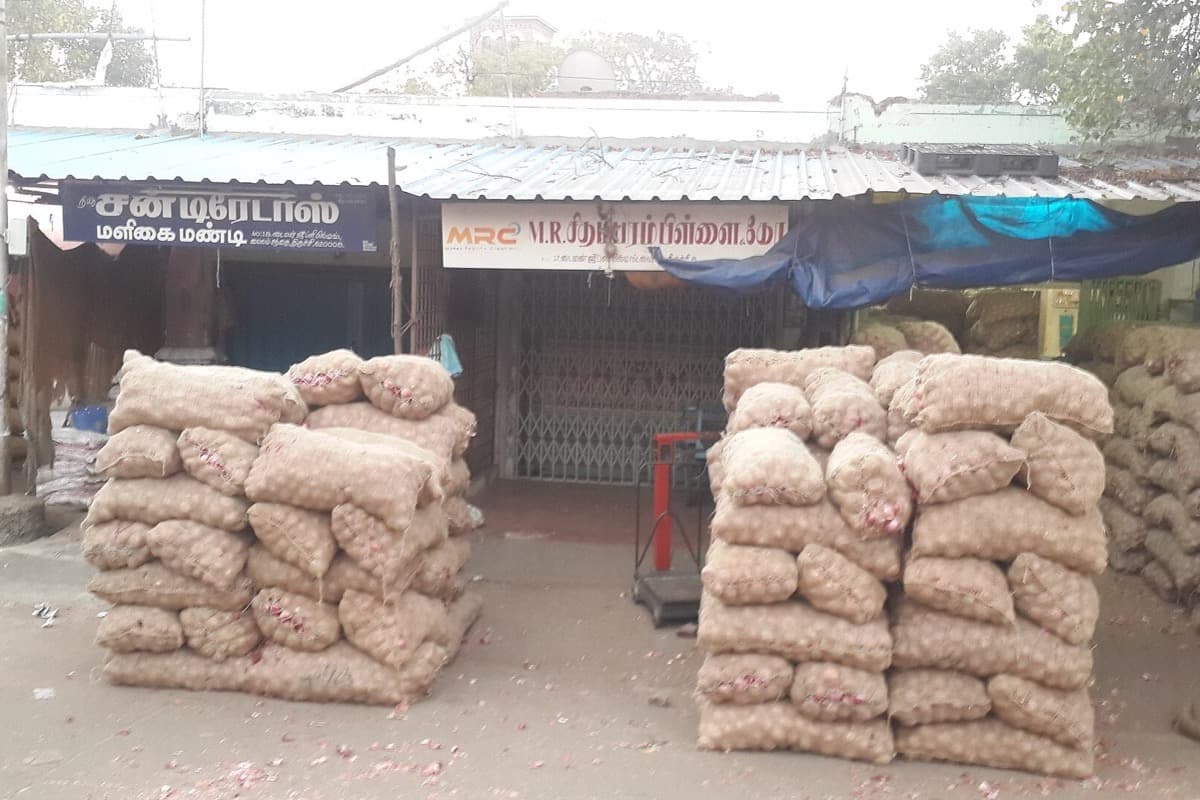
The barrier to appearing to be an Indian agricultural exporter is close to zero. A domain, a product gallery and a contact form take an afternoon. The barrier to actually loading a compliant container is considerably higher, and the gap between those two things is where most first-time buyers lose money.
This is a guide to closing that gap. None of it requires travelling to India, and most of it can be done before you send a proforma invoice back.
Start with the registrations
Indian exporters operate under a small set of registrations. Asking for them is routine, and any working exporter will produce them without hesitation. What matters is less that the documents exist than that the details on them agree with each other and with the company you think you are dealing with.
| What to ask for | What it establishes | What to check |
|---|---|---|
| IEC (Import Export Code) | The entity is registered to trade internationally at all | Name and address match the invoicing entity |
| GST registration | A real, tax-registered Indian business | The GSTIN matches the legal name |
| APEDA registration | Registered for scheduled agricultural exports | Current rather than lapsed |
| Packhouse recognition | Access to a facility that meets export handling standards | Whether it is their own or a shared facility |
| Bank details | Payment goes to the trading entity | Account name matches the invoice exactly |
Registration is a floor, not a qualification
It is worth being clear about what these documents do and do not prove. They establish that a legally constituted business exists and is permitted to export. They say nothing about whether it can consistently grade to your specification, hold a cold chain, or handle a claim professionally.
Plenty of registered entities are effectively brokers: they take your order, buy from whoever is cheapest that week, and have limited control over what actually goes into the container. That is not automatically disqualifying, but you should know which you are dealing with, because it determines how much verification the rest of the process needs.
Questions that separate operators from intermediaries
A short conversation reveals more than a document pack. The questions below are ordinary trade questions, and someone who handles their own consignments answers them immediately and specifically.
- Where is the product sourced, by region and season? Vague answers on origin usually mean vague control over quality.
- Do you grade in your own facility or a third party’s? Either is workable; evasiveness is not.
- What proportion of a typical lot makes export grade? A supplier who measures this will give you a number.
- What happens if a container arrives out of specification? Listen for a process rather than reassurance.
- Can I appoint my own inspection agency at my cost? The only acceptable answer is yes.
- Which ports do you normally load from, and what is your usual transit to my port?
Verify the trade, not just the company
Indian export shipments generate customs records, and several commercial trade-data platforms aggregate them. For a modest subscription, or sometimes from a free preview, you can see whether a company actually ships the product it claims to, in what volumes, and to which destinations.
This is the most direct verification available to a buyer, because it checks behaviour rather than paperwork. A supplier presenting itself as an established pomegranate exporter with no pomegranate shipment history is telling you something useful. Equally, a young company with modest but genuine shipment records is a different and often perfectly acceptable proposition, provided you size the first order accordingly.
Certifications, and which ones are relevant
Buyers are routinely advised to demand food-safety certification, but the advice is often given without distinguishing which schemes apply to which products.
- GlobalG.A.P. certifies farm-level practice and is most relevant to fresh produce destined for European retail. It certifies the growing operation, not the trader, so ask which farms are certified.
- HACCP and ISO 22000 apply to processing and handling facilities. They are meaningful for packhouses and processed goods, less so for a trader with no facility of their own.
- Organic certification is specific and separate. Do not accept general food-safety certificates as evidence of organic status.
- Residue testing to your destination market’s limits matters more than any certificate for most fresh produce, and can be arranged per shipment.
Ask for copies rather than logos on a website, check the certificate number and expiry, and confirm the certified entity is the one you are buying from. A certificate belonging to an associated company is not the same thing.
Structure the first order to limit exposure
Verification reduces risk; it does not remove it. The first order is where the relationship is actually tested, so it should be built to survive being wrong.
- Order a smaller quantity than your programme needs, even where the unit economics are worse. The premium is cheap relative to a bad container.
- Agree the specification in writing, in numbers, before any payment: sizes, tolerances, packing, maximum defect percentages.
- Appoint a third-party inspection agency at loading. This is standard practice and no reputable supplier objects.
- Use a payment structure that leaves something outstanding until documents or inspection are satisfactory, rather than paying everything in advance.
- Keep the temperature record for reefer shipments. Without it, cold-chain disputes cannot be resolved.
Warning signs worth acting on
- Reluctance to allow third-party inspection, for any stated reason.
- Payment requested to an account in a different name, a different country, or a personal account.
- Prices well below the prevailing market without a specific, checkable explanation.
- Photographs that appear on multiple unrelated supplier websites.
- Pressure to commit quickly on the basis of a closing window or a competing buyer.
- Inability to give a straight answer about who owns the goods at the point you pay.
None of these is proof of bad faith on its own. Two or more together is a reason to slow down, and slowing down costs you very little compared with the alternative.
What good looks like
A supplier worth building a programme with will answer specification questions in numbers rather than adjectives, tell you plainly when they cannot meet a requirement, and volunteer bad news about a crop before you discover it yourself. That last habit is the strongest single indicator, and it is the one no document pack can demonstrate. It emerges over the first two or three shipments, which is precisely why the first order should be sized to teach you something rather than to fill a season.
Sourcing from India?
Products covered in this guide
Grades, packing specifications and container capacities for each, or send us your destination port and quantity for a quotation.
More guides
Indian Agricultural Export Calendar: When to Buy What
Several Indian products are available year-round, but availability and value are not the same thing. When each crop is at its best, and when to commit volume.
ShippingReefer Temperatures for Onion, Banana, Pomegranate and Chilli
The setpoint, humidity and vent settings for each fresh product we ship, why a reefer cannot rescue warm fruit, and the chilling injury that only shows up at destination.
CompliancePhytosanitary Certificates from India: A Buyer’s Guide
What the certificate actually proves, who issues it in India and how, the faults that get consignments held, and how to check one before your goods arrive.
ComplianceLetters of Credit for Produce Importers: What to Know
The ICC estimates 65 to 80 per cent of presentations are refused first time. On perishable cargo, paperwork delay is not an inconvenience, it is spoilage.