
Air Freight or Reefer? Shipping Fresh Green Chilli from India
For a fifteen-day product, the shipping decision is the product decision. How volume, distance and value determine whether green chilli should fly or sail.
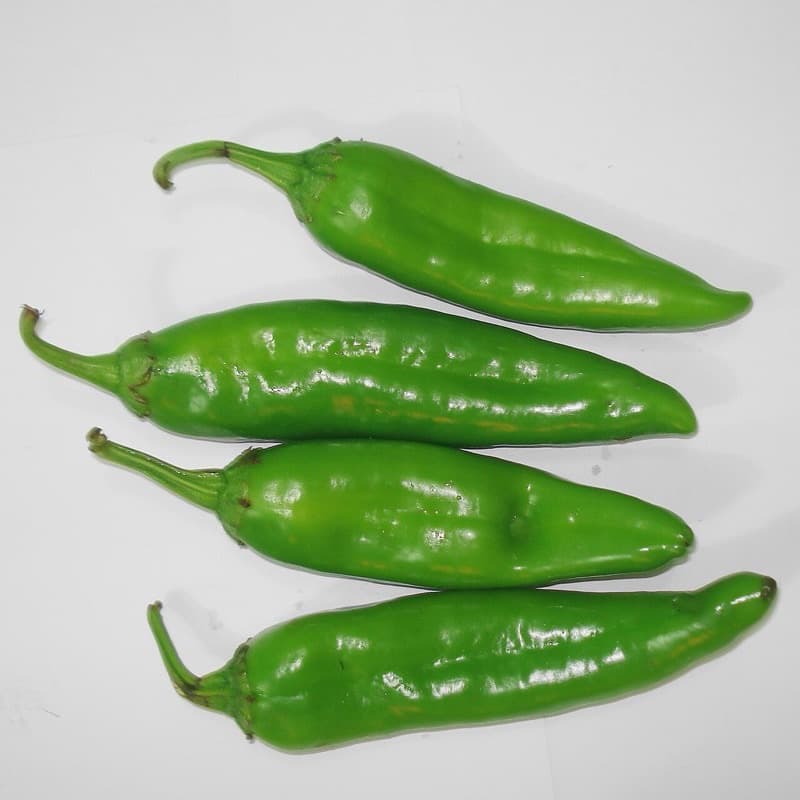
Fresh green chilli holds roughly fifteen days from harvest under proper cold chain. That single number governs everything else about exporting it. With a fortnight of usable life, the choice between air freight and a reefer container is not a logistics detail to settle after the price is agreed, it determines which markets are reachable at all, what the landed cost looks like, and how much margin for error the shipment carries.
The cold chain starts in the field
Before comparing shipping modes, it is worth being clear that neither works without proper handling at origin. Chilli picked in the middle of the day carries substantial field heat, and every hour that heat remains consumes shelf life. Pre-cooling shortly after harvest removes it and is the highest-leverage step in the entire process.
From there the fruit is graded, packed into ventilated corrugated boxes of 5–10 kg, and held cold until loading. Ventilation is not incidental: chilli respires, and packing that traps heat and moisture produces exactly the soft, patchy fruit buyers reject.
The case for air freight
Air shipment to Gulf destinations runs roughly two to three days door to door. Against a fifteen-day shelf life, that leaves the overwhelming majority of the product’s usable life in the buyer’s hands rather than consumed in transit, which is the entire argument for flying it.
- Arrival condition is materially better, and the fruit reaches the shelf with more selling days remaining.
- Smaller consignments are viable, so trial orders and new buyer relationships do not require committing to a full container.
- Schedules are frequent, making it possible to ship against demand rather than forecast.
- Exposure to any single failure is smaller, because consignments are smaller.
The cost is the obvious drawback. Air freight is charged by weight, and for a product of modest per-kilo value the freight component can rival or exceed the value of the goods themselves. Air makes sense where the destination market pays for freshness and the volumes are modest.
The case for reefer
Sea freight in a temperature-controlled container inverts the trade-off. Per-kilogram freight cost falls sharply, which is what makes larger programmes economic, but transit consumes a substantial share of the product’s life. Gulf routes typically run around seven to twelve days from the port of loading and Southeast Asian routes twelve to eighteen, which against a fifteen-day shelf life, once harvest-to-port and discharge-to-shelf time are added, leaves very little slack.
That narrow margin is the crux. Reefer works for green chilli where the route is short, the cold chain is genuinely unbroken from field to discharge, and the buyer can move the product quickly on arrival. It becomes precarious where any of those conditions is uncertain, because a delayed vessel or a lapse in temperature control has no buffer to absorb it.
Working the numbers
The comparison is easier to make concrete than most buyers expect. Take the delivered cost per kilogram and split it into product and freight, then look at what proportion freight represents.
For a modestly priced vegetable moving by air, freight is frequently a large fraction of the landed cost, sometimes approaching or exceeding the value of the goods themselves. By sea, the same freight spread across a full container falls to a small fraction. That difference is the entire argument, and it is why air freight suits markets paying a premium for freshness while reefer suits price-led wholesale.
But landed cost is only half the calculation. The other half is what proportion of the consignment you actually sell. A container that arrives with a share of the load soft or discoloured has a higher effective cost per saleable kilogram than a smaller air shipment that arrives sound. Work the comparison on saleable weight, not shipped weight, and reefer looks less attractive on any route where the cold chain is uncertain.
Choosing between them
| Factor | Favours air freight | Favours reefer |
|---|---|---|
| Volume | Trial orders, modest weekly quantities | Full container loads, ongoing programmes |
| Distance | Longer routes where sea transit eats the shelf life | Short routes, particularly Gulf destinations |
| Market | Premium retail paying for freshness | Wholesale and processing, where price leads |
| Risk tolerance | Low (small consignments, short exposure | Higher) needs a reliable cold chain end to end |
| Relationship | First orders, testing a new buyer | Established buyers with proven offtake |
A common and sensible pattern is to begin on air freight while a relationship is being established, then move to reefer once volumes justify it and both sides have confidence in the handling. Starting with a full reefer container to an untested buyer concentrates a great deal of risk into a single shipment of a product that cannot wait.
What to settle before the first shipment
- Variety and grade, G4 and bullet types differ in heat and appearance, and buyers are rarely indifferent.
- Box size and count, and whether you need buyer-branded packaging.
- Target temperature and the maximum acceptable transit time.
- Residue (MRL) limits for the destination market, since these are set by your regulator and not by the origin.
- Who bears the loss if a consignment arrives out of condition, and what evidence settles it.
That last point deserves more attention than it usually receives. For a product this perishable, agreeing in advance how condition is assessed at arrival (and by whom) prevents a disagreement that neither party can resolve after the fact.
Sourcing green chilli?
We export green chilli from India
See grades, packing specifications and container capacities, or send us your destination port and quantity for a quotation.
More guides
Letters of Credit for Produce Importers: What to Know
The ICC estimates 65 to 80 per cent of presentations are refused first time. On perishable cargo, paperwork delay is not an inconvenience, it is spoilage.
SourcingHow to Verify an Indian Produce Exporter Before You Order
Anyone can build a website and claim to export. Here is what actually distinguishes a working exporter from a broker with a domain name, and how to check it before money moves.
ShippingIncoterms for Fresh Produce: Who Pays When Cold Chain Fails
The Incoterm decides who pays for the reefer and who carries the loss if the temperature slips. Most fresh-produce buyers discover which, only after a container arrives warm.
ComplianceGlobalGAP, HACCP and ISO 22000: A Produce Buyer's Guide
Certificates get demanded, attached to emails and never read. Here is what each scheme actually covers, which ones apply to fresh produce, and how to check any of them in minutes.