
Indian Pomegranate Export Season: Bahar Cycles and Availability
Indian pomegranate is available for most of the year, but not continuously. Understanding the three bahar cycles tells you when to buy and when supply tightens.
Buyers new to Indian pomegranate often assume a single annual harvest, then find their supplier quoting in months they did not expect, or declining to quote in months they did. Indian pomegranate cultivation works differently. Growers manipulate flowering deliberately, which spreads production across the year but creates distinct windows of abundance and scarcity.
What a bahar is
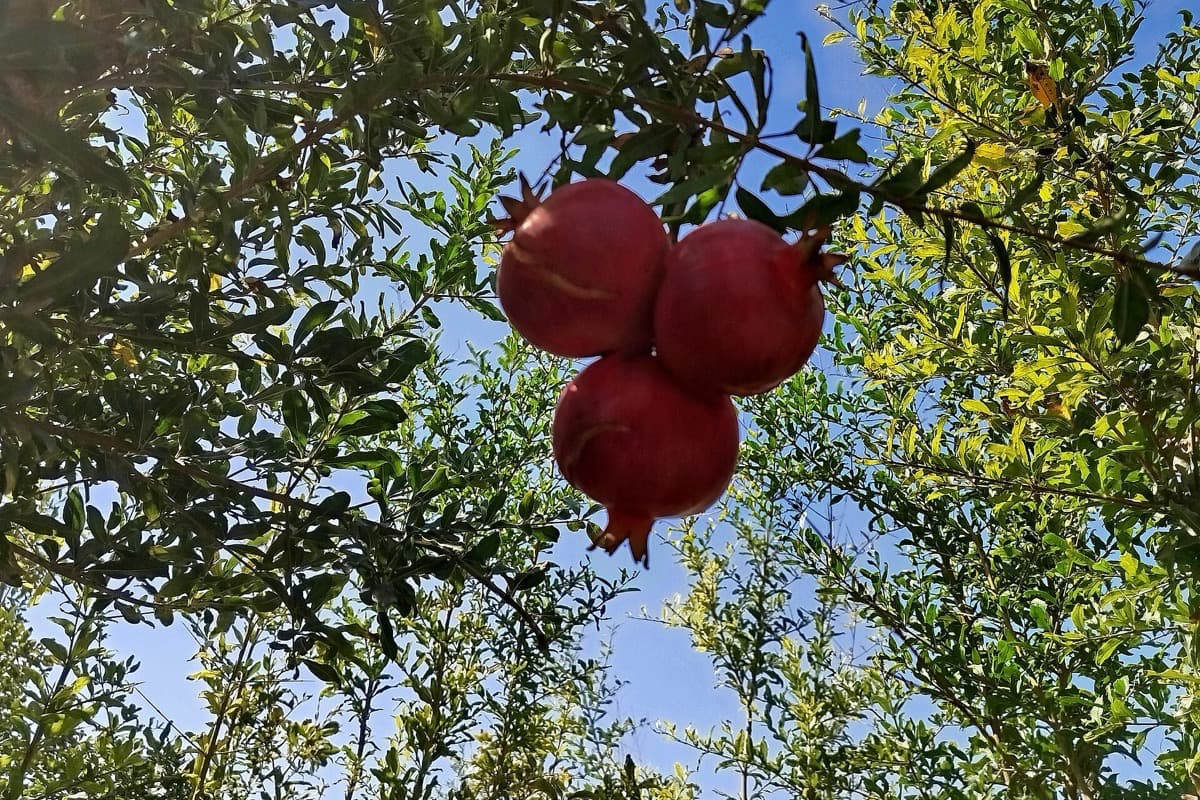
Pomegranate trees in India do not follow one natural fruiting season. Growers withhold irrigation to induce a rest period, then resume it to trigger flowering at a chosen time. Each induced flowering cycle is called a bahar, named for the season in which flowering occurs. Fruit follows roughly five to six months later.
Most orchards commit to one bahar per year per block, because attempting more exhausts the tree. Larger growing regions stagger blocks across cycles, which is how the country maintains near year-round availability.
The three cycles
| Bahar | Flowering | Approximate harvest | Character |
|---|---|---|---|
| Ambe (Ambia) | January – February | June – September | Monsoon-period fruit; quality more variable |
| Mrig | June – July | November – February | Largest export volume; strong colour |
| Hasta (Hast) | September – October | February – May | Good quality; supplies the spring window |
Mrig bahar is the cycle most export programmes are built around. Fruit matures through the cooler, drier months, which favours skin colour and aril development, and it lands in a window when Gulf and European demand is strong. If you are planning a first Indian pomegranate programme, this is the window to target.
What separates export grade from local market fruit
A grower does not produce two crops, one for export and one for the domestic market. The same orchard produces both, and grading at the packhouse decides which is which. Understanding what that grading looks for tells you what you are paying a premium for.
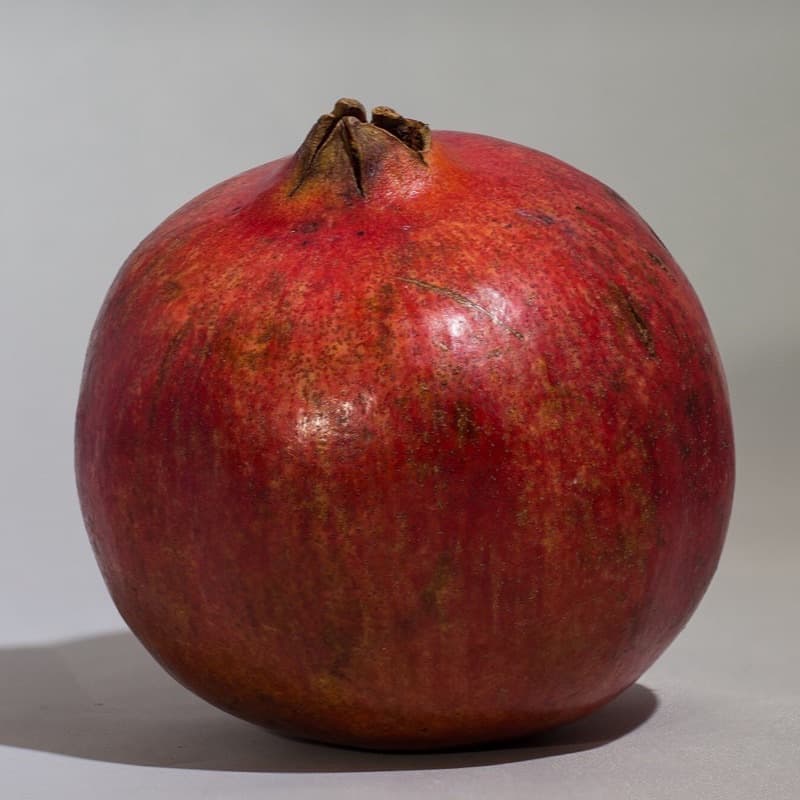
- Skin colour and finish, even saffron-red colour without sun-scald patches, dark blemishes or scarring. This is the single most visible criterion and the one that most often downgrades otherwise sound fruit.
- Count size and uniformity, fruit graded into narrow weight bands so a carton presents consistently. Mixed sizes in one box is a domestic-market characteristic.
- Crown condition, the calyx intact and undamaged, since it is both a visual cue of freshness and a common entry point for decay.
- Freedom from cracking, split fruit cannot be exported at all. Cracking is driven by irrigation irregularity late in the cycle, which is why grower practice matters as much as variety.
- Internal quality, aril colour and sweetness, assessed on sample fruit rather than every unit.
Ask what proportion of a given orchard block makes export grade. A grower who answers precisely is measuring it; one who says "all of it" is not.
Cold chain and how long the fruit really holds
Bhagwa is stored and shipped at around 5–7°C. Handled properly from the packhouse, fruit holds roughly two months, which is what makes sea freight viable to the Gulf, Europe and Asia rather than requiring air.
That figure assumes the chain is unbroken. Pomegranate is comparatively forgiving next to green chilli, but the failure mode is the same: time spent warm early in the journey is deducted from shelf life at the far end, and it cannot be recovered by cooling harder later. Pre-cooling soon after harvest is the step that protects the whole programme.
Where the fruit comes from
Maharashtra accounts for the majority of Indian pomegranate production and effectively sets the market, with Solapur, Sangli, Nashik and Ahmednagar the principal districts. Karnataka, Gujarat, Andhra Pradesh and Rajasthan add meaningful volume, and their slightly different climates help extend supply at the edges of each window.
Why buyers specify Bhagwa
Bhagwa is the dominant Indian export variety, and international buyers usually name it explicitly. It carries a deep saffron-red skin, soft seeds and dark red arils, and (most importantly for export) a thicker rind than older varieties such as Ganesh. That rind is what allows the fruit to survive sea freight in sound condition, which is why Bhagwa displaced its predecessors in the export trade rather than simply competing with them.
Fruit is graded by count size, commonly from around 200 g upward. Gulf buyers frequently take fruit in the 250–300 g range, while European programmes often specify 300 g and above. Packing is typically 3–4 kg corrugated boxes with fruit separated to prevent bruising.
Planning across the year
If you need continuity of supply rather than a single seasonal buy, plan against two cycles rather than one. Mrig bahar covers roughly November to February, and Hasta bahar extends into the spring. The narrowest window is usually late in the Ambe period, when quality is most affected by monsoon conditions and export-grade fruit is harder to secure at volume.
Discuss the following season with your supplier before it starts. Growers commit blocks to a bahar months in advance, and buyers who indicate volume early are in a materially better position than those arriving mid-window looking for containers.
Sourcing pomegranate?
We export pomegranate from India
See grades, packing specifications and container capacities, or send us your destination port and quantity for a quotation.
More guides
Letters of Credit for Produce Importers: What to Know
The ICC estimates 65 to 80 per cent of presentations are refused first time. On perishable cargo, paperwork delay is not an inconvenience, it is spoilage.
SourcingHow to Verify an Indian Produce Exporter Before You Order
Anyone can build a website and claim to export. Here is what actually distinguishes a working exporter from a broker with a domain name, and how to check it before money moves.
ShippingIncoterms for Fresh Produce: Who Pays When Cold Chain Fails
The Incoterm decides who pays for the reefer and who carries the loss if the temperature slips. Most fresh-produce buyers discover which, only after a container arrives warm.
ComplianceGlobalGAP, HACCP and ISO 22000: A Produce Buyer's Guide
Certificates get demanded, attached to emails and never read. Here is what each scheme actually covers, which ones apply to fresh produce, and how to check any of them in minutes.