
Reefer Temperatures for Onion, Banana, Pomegranate and Chilli
The setpoint, humidity and vent settings for each fresh product we ship, why a reefer cannot rescue warm fruit, and the chilling injury that only shows up at destination.
Key takeaways
- G9 banana travels at 13–14°C. Below about 13°C, even for a few hours, it suffers chilling injury and may fail to ripen.
- Pomegranate travels at about 5–7°C and 90–95% humidity. Held below 5°C for more than about four weeks, it develops scald and browning.
- Green chilli keeps best at about 7.5°C. Colder than roughly 7°C causes pitting and discoloration that appears only after the fruit warms up.
- Onion needs dry, well-ventilated carriage: 0–4°C in a reefer with the vents at least 70% open, or a ventilated container on short routes.
- A reefer holds temperature; it does not cool warm cargo. Produce has to be pre-cooled before it is stuffed.
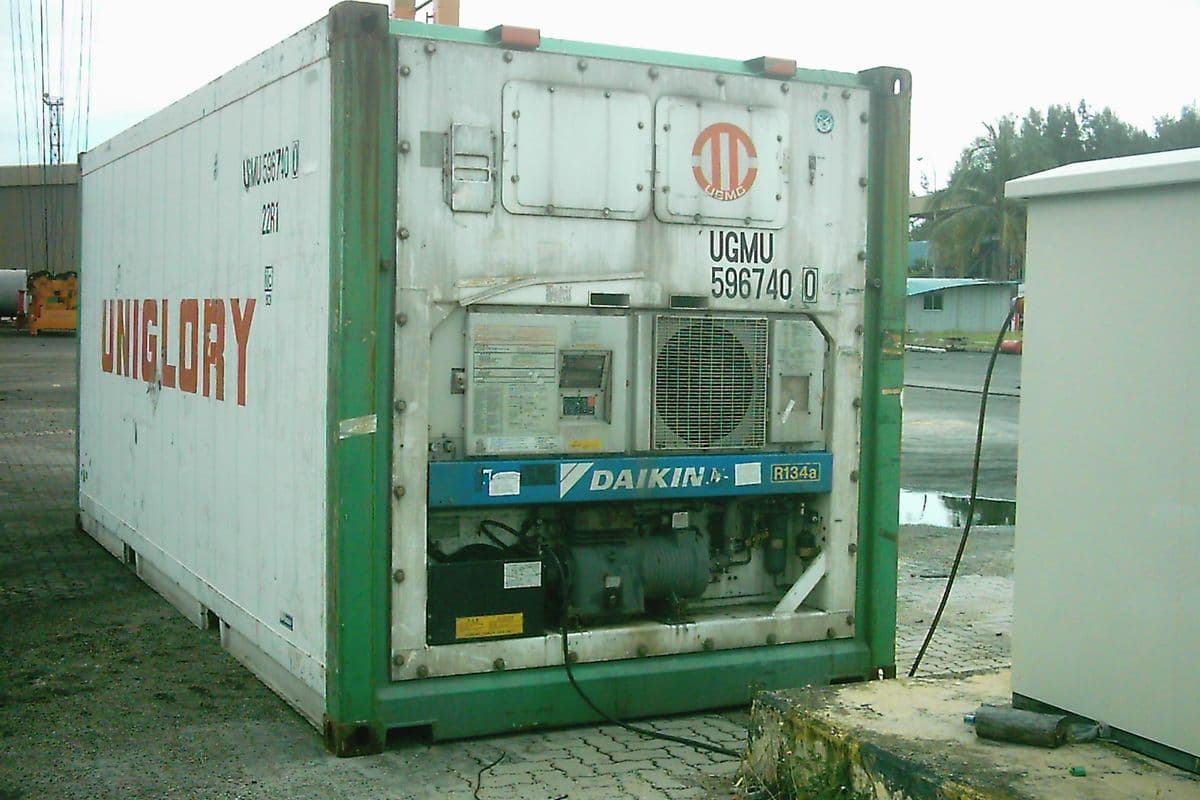
A reefer is a shipping container with its own refrigeration unit, and every fresh product has a temperature window it needs to stay inside. The window is narrower than most first-time buyers expect, and the costly mistakes are rarely a container running too warm. They come from setting a reefer colder than the fruit can tolerate, or from loading produce that was never cooled in the first place.
This guide sets out the carriage conditions for the fresh products we ship from India, explains why each one sits where it does, and lists what your booking instruction should say. Treat the figures as starting points to agree with your supplier and carrier, not as a substitute for the carrier’s own cargo instructions.
What temperature should a reefer be set to for each product?
Set the reefer to the product, not to the coldest temperature the unit can hold. The table gives the carriage temperature commonly used for each product, the humidity it prefers, and the point at which it starts to suffer. Banana and green chilli are damaged by cold; onion is damaged by moisture.
| Product | Carriage temperature | Relative humidity | Main risk | Ventilation |
|---|---|---|---|---|
| G9 banana (green) | 13–14°C | 90–95% | Chilling injury below about 13°C, even for a few hours | Open; controlled atmosphere optional |
| Bhagwa pomegranate | 5–7°C | 90–95% | Scald and browning after about four weeks below 5°C | Open |
| Green chilli | 7–8°C | High, around 90–95% | Pitting and seed discoloration below about 7°C | Open |
| Onion (dry bulb) | 0–4°C in a reefer, or ambient in a ventilated container | Low: dehumidify, around 65–70% | Sprouting and rot when warm, damp or poorly ventilated | Vents at least 70% open |
| Dry red chilli | Ambient in a dry container; 0–10°C in cold store | 60–70% | Mould and aflatoxin if moisture rises | Dry container, dry packing |
Why will a reefer not cool down warm produce?
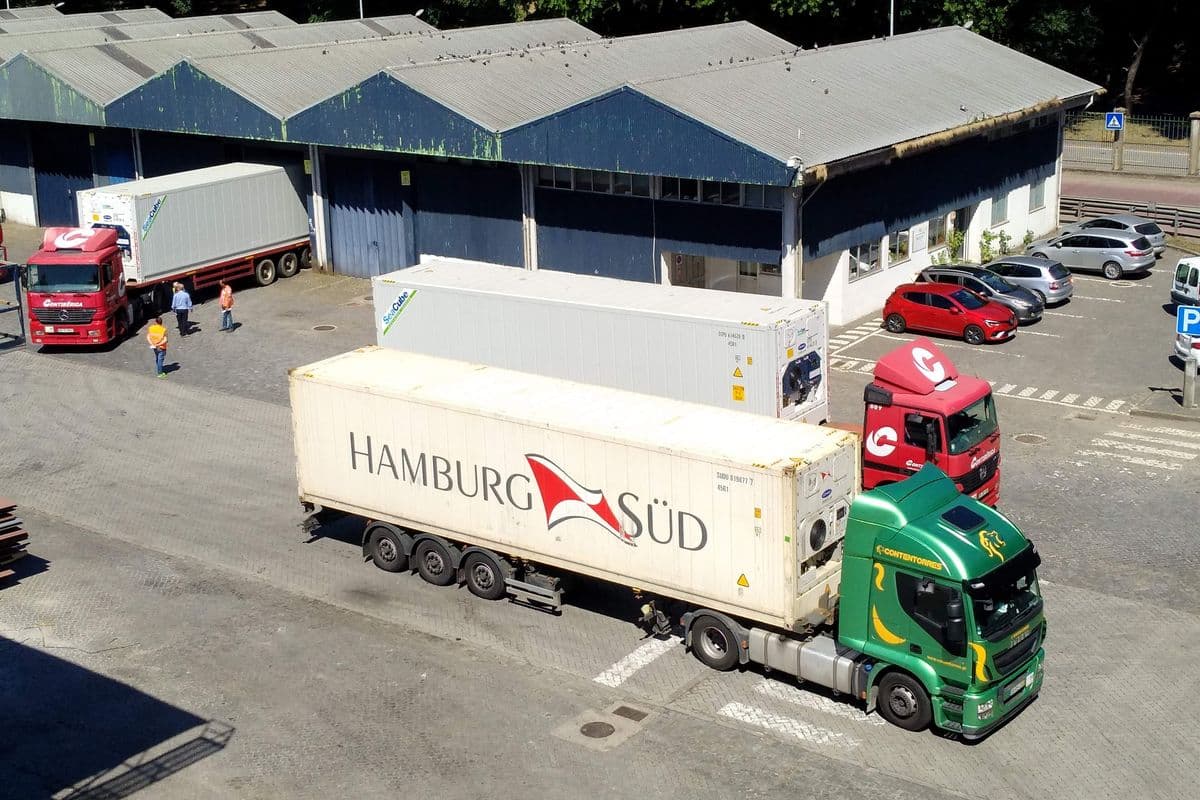
Because it is not designed to. A reefer unit is built to hold a set temperature, not to pull field heat out of a full load, and Kuehne+Nagel’s reefer guide is explicit that cargo must be pre-cooled to its transport temperature before loading. Air in a packed container moves through narrow gaps between cartons and bags, so produce that goes in warm stays warm for days, respiring, losing water and ageing.
The practical rule follows from that. Ask for the pulp temperature at stuffing, not just the setpoint, and ask how the produce was cooled after harvest. The marine insurer Gard notes that onions loaded straight from field curing can push a container above 20°C and lose much of their shelf life, even when the reefer itself works perfectly.
What is chilling injury, and why does it show up late?
Chilling injury is damage to tropical and subtropical produce held above freezing but below its safe minimum temperature. The cells are injured in the cold, but the visible symptoms usually appear only after the fruit is warmed again, in the ripening room or on the shelf. That timing is what makes it expensive: the container arrives at the right temperature, the fruit looks sound, and the damage shows when it is too late to establish where it happened.
- Banana: a dull, smoky or greyish peel, dark streaks under the skin, and uneven or failed ripening.
- Pomegranate: brown scald on the husk, browning of the white membranes between the arils, and arils that turn pale.
- Green chilli: surface pitting, water-soaked patches and discoloured seeds.
G9 banana: 13 to 14°C, and never colder
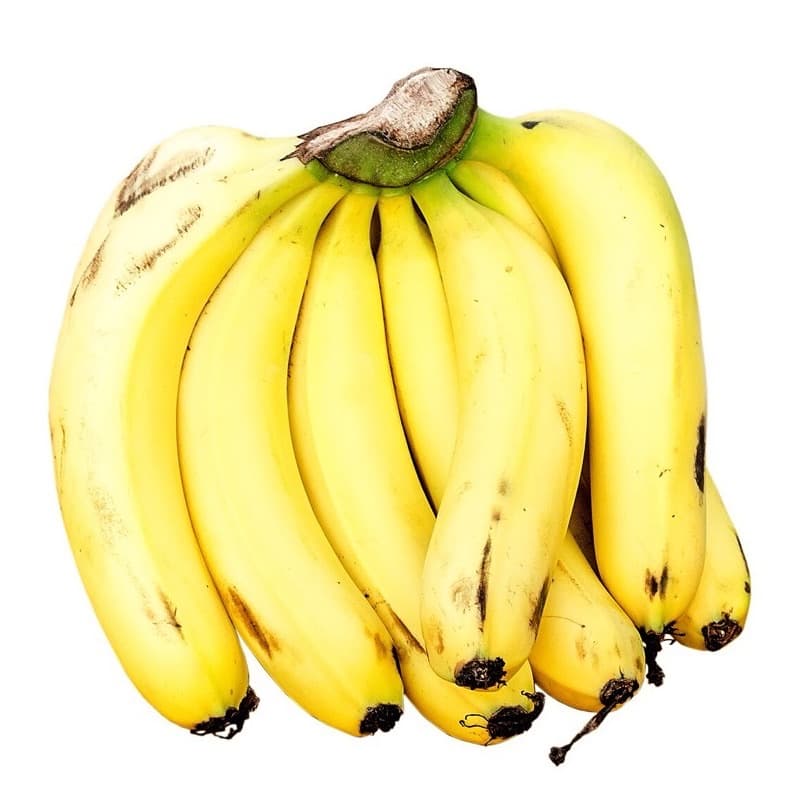
Mature-green bananas are held at 13–14°C with 90–95% humidity. The WFLO Commodity Storage Manual describes bananas as so chilling-sensitive that handling methods are designed to avoid temperatures below 13°C even for a few hours. At that holding temperature, mature-green fruit keeps for about four weeks in ethylene-free air, and up to about six weeks in a controlled atmosphere of 2–5% oxygen and 2–5% carbon dioxide.
Two details matter for an Indian shipment. First, do not let the reefer’s supply air run below 13°C to cool fruit faster, because the coldest air reaches the cartons nearest the unit first. Second, ethylene is the enemy in transit and the tool at destination: keeping it low holds fruit green on the water, and ripening rooms later apply it deliberately at 14–20°C to bring the fruit to colour.
Pomegranate: cold enough to slow water loss, not so cold it scalds
Pomegranate is shipped cold, typically at 5–7°C, and at high humidity. The Global Cold Chain Alliance’s storage tables give 5–10°C and 90–95% relative humidity, with a storage life of eight to ten weeks. The husk loses water easily, and a pomegranate that has dried out shows it as hard, shrivelled, browning skin, so humidity and liner packing matter as much as temperature.
The lower limit is about time as well as degrees. Postharvest research summarised by UC Davis finds that fruit held below 5°C for more than about four weeks develops chilling injury, with the symptoms appearing once it is moved to room temperature. On the transit times from India to the Gulf, Europe or Southeast Asia, a setpoint of 5–7°C keeps clear of that.
Green chilli: the 7°C floor
Fresh chilli keeps best at about 7.5°C. UC Davis gives that as the temperature for maximum shelf life, around three to five weeks under ideal storage. Warmer than that, chillies lose water, shrivel and decay faster; colder, chilling damage builds up over time, first as discoloured seeds and later as pitting.
Those figures assume fruit cooled immediately after picking. A commercial shipment loses part of that life to field heat, grading and the road to port, which is why exporters plan green chilli programmes on roughly two weeks of saleable life from harvest. Peppers are also sensitive to high carbon dioxide, one more reason to keep the vents open.
Onion: dry and well ventilated
Onion is the exception in this list: the main danger is moisture, not cold. Cured dry onions store best at about 0°C and 65–70% relative humidity, according to the WFLO manual. Gard’s guidance on carrying onions gives 0–3°C, and 0–4°C in its case examples, with the reefer vents open at least 70% of the time. At 12–20°C onions keep for around 50 days; at 0–4°C, for up to 200.
Most Indian onion bound for the Gulf, Bangladesh, Sri Lanka and Malaysia travels in ventilated dry containers, because the routes are short. Where a reefer is used, standard units can switch to a dehumidification mode. Ventilation does a second job too: it stops carbon dioxide building up inside the box, which can be dangerous for whoever opens the doors.
Dry red chilli: keep it dry
Dry chilli is not a reefer cargo in the usual sense. It moves in dry containers, and in cold storage between harvests it is held at about 0–10°C and 60–70% relative humidity. The WFLO manual notes that for dried chilli, careful humidity control matters more than holding an exact temperature, because damp chilli is where mould, and with it aflatoxin, starts.
What should the reefer booking instruction say?
Write the carriage conditions down at booking, and make sure the same figures reach the carrier on the shipping instructions. A useful instruction covers six points.
- The setpoint in °C, and whether it is controlled on supply or return air.
- The fresh-air vent setting, as a percentage open or in cubic metres per hour.
- The humidity setting, including dehumidification for onions.
- The pulp temperature of the produce at stuffing, recorded by the packhouse.
- A pre-trip inspection of the reefer unit before it is released for loading.
- Who downloads the temperature log at destination, and how soon after discharge.
If something goes wrong, that record decides the claim, and the Incoterm in your contract decides who carries the risk at each stage of the journey. Our guide to Incoterms for fresh produce covers how that works when a reefer fails.
Sources & further reading
- WFLO Commodity Storage Manual: Bananas · Global Cold Chain Alliance, revised 2018
- Commodity Storage and Handling Manual addendum · Global Cold Chain Alliance, storage table including pomegranate, 2024
- WFLO Commodity Storage Manual: Onions and Onion Sets · Global Cold Chain Alliance, 2018
- WFLO Commodity Storage Manual: Peppers, Dry Chili · Global Cold Chain Alliance, 2018
- Know your onions: the carriage of onions · Gard, marine insurer
- Reefer logistics guide · Kuehne+Nagel
- UC Davis Postharvest Technology Center · Produce fact sheets for banana, chile pepper and pomegranate
Frequently asked questions
What temperature are bananas shipped at?
Green bananas are shipped at 13–14°C with 90–95% relative humidity. Below about 13°C, even for a few hours, they suffer chilling injury, which shows as a dull, greyish peel and fruit that ripens unevenly or not at all.
Can pomegranates be shipped at 2°C?
It is not recommended for anything but a short journey. Pomegranates held below 5°C for more than about four weeks develop chilling injury, seen as brown husk scald and pale arils once the fruit warms. A setpoint of 5–7°C with high humidity is the usual choice.
Do onions need a refrigerated container?
Not always. On short routes from India, such as to the Gulf, Bangladesh or Malaysia, onions usually travel in ventilated dry containers. For long or hot-season voyages, a reefer at 0–4°C, dehumidified and with the vents at least 70% open, extends shelf life considerably.
What is the best storage temperature for green chilli?
About 7.5°C, which gives fresh chilli its longest shelf life. Colder than about 7°C causes chilling injury that shows up after warming, and warmer temperatures speed up water loss and decay.
Why does a reefer need pre-cooled cargo?
Reefer units are designed to maintain a temperature, not to cool a full load of warm produce. Fruit loaded warm stays warm for days inside a packed container, so it should be cooled to its carriage temperature before stuffing.
What humidity should dry red chilli be stored at?
Around 60–70% relative humidity, at 0–10°C in cold storage. Controlling humidity matters more than holding an exact temperature, because damp chilli is where mould and aflatoxin start.
Sourcing from India?
Products covered in this guide
Grades, packing specifications and container capacities for each, or send us your destination port and quantity for a quotation.
More guides
Incoterms for Fresh Produce: Who Pays When Cold Chain Fails
The Incoterm decides who pays for the reefer and who carries the loss if the temperature slips. Most fresh-produce buyers discover which, only after a container arrives warm.
CompliancePhytosanitary Certificates from India: A Buyer’s Guide
What the certificate actually proves, who issues it in India and how, the faults that get consignments held, and how to check one before your goods arrive.
ComplianceLetters of Credit for Produce Importers: What to Know
The ICC estimates 65 to 80 per cent of presentations are refused first time. On perishable cargo, paperwork delay is not an inconvenience, it is spoilage.
SourcingHow to Verify an Indian Produce Exporter Before You Order
Anyone can build a website and claim to export. Here is what actually distinguishes a working exporter from a broker with a domain name, and how to check it before money moves.