
Cocopeat, Coir Pith Blocks for Horticulture
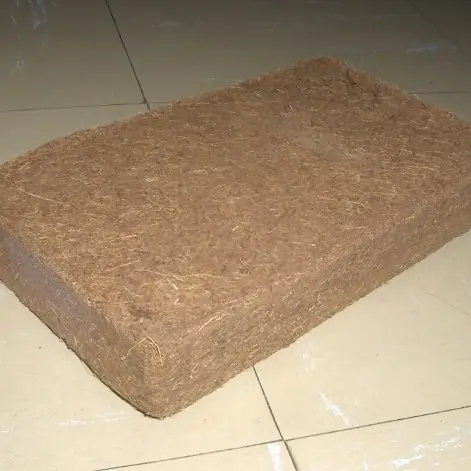
We export cocopeat, also called coir pith: the spongy material left when the long fibre is extracted from coconut husks. Sieved, dried and compressed into blocks, it becomes a growing medium that holds water well while staying open to air, which is why nurseries, greenhouse growers and hydroponic farms use it in place of, or alongside, peat moss. India is one of the largest suppliers. The International Coconut Community reports that India shipped about 954,000 tonnes of coir pith in 2025, up from about 733,000 tonnes in 2024.
The grade matters more than the form. Raw coir pith carries salts from the husk, chiefly potassium and sodium, which show up as electrical conductivity (EC). Washing with fresh water lowers EC, and low EC grades are commonly specified below 0.5 mS/cm. Buffering goes a step further: the pith is soaked in a calcium nitrate solution so that calcium replaces the potassium and sodium held on the material itself, which washing alone does not remove. Washed cocopeat suits general nursery use; buffered cocopeat is the usual choice for hydroponic and greenhouse crops.
Our standard product is the 5 kg compressed block, roughly 30 × 30 cm, which expands several times in volume when soaked. Briquettes of around 650 g, grow bags for greenhouse crops and discs for seed raising can be supplied on request. Blocks ship palletised or floor-loaded in 40 ft high cube containers.
Ask for numbers rather than adjectives. A cocopeat specification should state EC with the test method, pH (commonly 5.5 to 6.8), maximum moisture at dispatch, expansion volume per block, and maximum sand and impurity content. The method matters as much as the figure: EC measured in a 1:1.5 water extract and EC measured in a 1:5 extract (EN 13038) are not comparable, so two suppliers quoting the same number may be describing different material. Pre-shipment lab reports can be arranged.
At a Glance
- Product
- Cocopeat (coir pith), 5 kg blocks
- Grades
- Washed low EC, buffered
- Other forms
- 650 g briquettes, grow bags, discs
- Specification
- EC, pH, moisture, expansion, sand
- MOQ
- 1 × 40 ft high cube container
- Uses
- Nurseries, greenhouses, hydroponics
Cocopeat Products
Frequently Asked Questions
What is the difference between washed and buffered cocopeat?
Washing rinses soluble salts out of the coir pith and lowers its EC. Buffering treats the washed pith with a calcium nitrate solution so that calcium takes the place of potassium and sodium held on the material itself, which washing does not remove. Buffered cocopeat is the usual choice for hydroponic and greenhouse crops; washed low EC cocopeat suits general nursery and potting use.
What EC should I specify?
For most horticultural uses, ask for low EC, commonly below 0.5 mS/cm, and state the test method next to the number. A figure from a 1:1.5 volume extract is not comparable with one from a 1:5 extract, so the method is what makes the number enforceable.
How much does a 5 kg block expand?
A 5 kg block expands to many times its compressed volume when soaked, but quoted figures vary widely between suppliers and grades. Rather than rely on a brochure number, agree an expansion figure and the soaking method in the contract, and check it on the pre-shipment sample.
What pH and moisture does cocopeat have?
pH is slightly acidic, commonly in the range of 5.5 to 6.8. Moisture at dispatch is usually kept low, often below 15 to 20 per cent, because excess moisture adds freight weight and can encourage mould in the container. State both as limits in your specification.
What other forms of cocopeat can you supply?
Alongside 5 kg blocks we can source 650 g briquettes for retail and small growers, grow bags for greenhouse vegetables such as tomatoes and cucumbers, discs for seed raising, and loose pith in bales. Tell us the form, size and grade, and we will confirm availability and packing.
How is cocopeat shipped?
In 40 ft high cube containers, either palletised or floor-loaded. How many blocks fit depends on block size and whether the load is palletised, so the quotation states the block count per container rather than an approximate tonnage.
Which documents come with a cocopeat shipment?
Commercial invoice, packing list, certificate of origin and bill of lading, with a phytosanitary certificate where the importing country requires one, as many do for plant-based growing media. Some destinations set specific import conditions for coir products, so check your import permit before the order is placed. Coir pith is classified under HS code 5305 00 40 in India’s tariff.
What is the minimum order for cocopeat?
One 40 ft high cube container. Cocopeat is a high-volume, relatively low-value product, so freight is a large share of the landed cost and part loads rarely make sense.
Buyer guides: Cocopeat
All export guides →Phytosanitary Certificates from India: A Buyer’s Guide
What the certificate actually proves, who issues it in India and how, the faults that get consignments held, and how to check one before your goods arrive.
ComplianceLetters of Credit for Produce Importers: What to Know
The ICC estimates 65 to 80 per cent of presentations are refused first time. On perishable cargo, paperwork delay is not an inconvenience, it is spoilage.
SourcingHow to Verify an Indian Produce Exporter Before You Order
Anyone can build a website and claim to export. Here is what actually distinguishes a working exporter from a broker with a domain name, and how to check it before money moves.